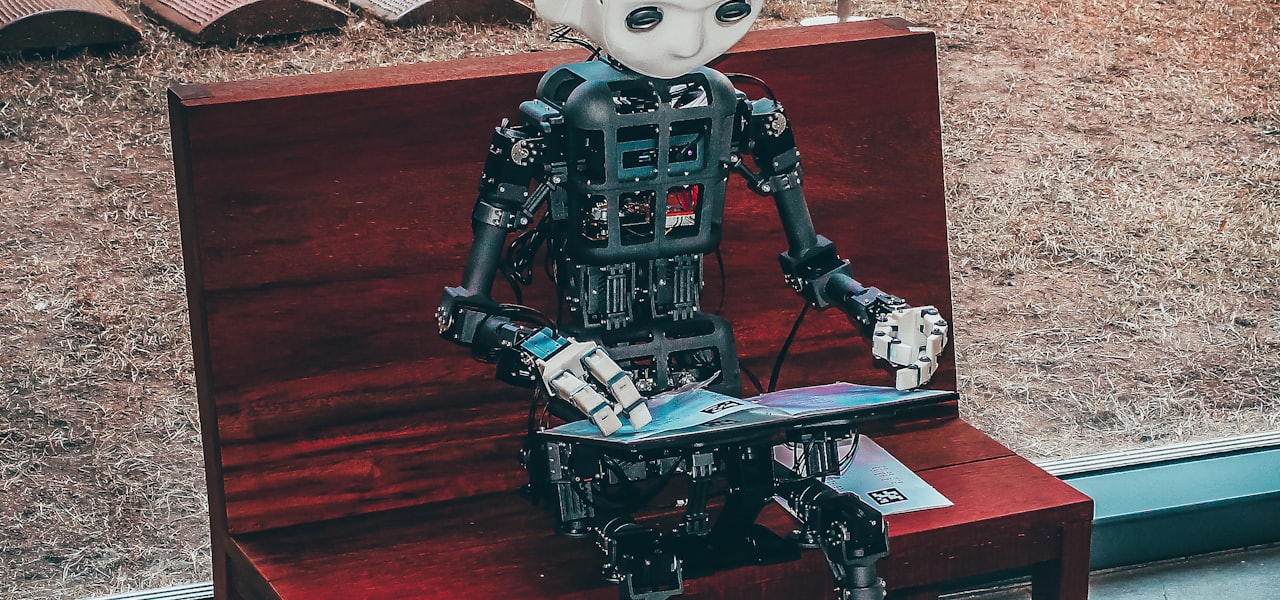
Education by algorithm refers to automated solutions that algorithmic agents or social bots offer to education, to assist with mundane educational tasks. These are often instrumentalist “educational reforms” or “curriculum transformations”, which have been implemented by policy makers and are supported by proprietary education technologies. New educational policies, mandated by transnational governance forums (like the OECD), have manufactured a connection between economies and education. Governments, schools and universities are expected to introduce or prepare students for an “unknown future”, to “future proof” them against an identified issue or to mitigate a national crisis. Technologies are seen as a catalyst to effect these changes. However, these policies mask a deeper problem, which include the assetization of education and the use of technologies as a means for surveillance and behavior modification. The traces that students and leave, through cookies, logins learning activities, assignments and tests, are collected, facetted, and shared with commercial organizations by these agents, to both predict future behavior and shape it. Techno solutionist thinking has led to managers adopting educational policies and reforms, and looking towards technologies to act as disrupters, liberators or agents to improve efficiency. During the COVID-19 pandemic, many more students had to modify their learning and working circumstances to protect themselves. Academics shifted their assessment practices from the dominant assessment of learning paradigm to an orientation that saw value in "assessment for learning". Big tech assisted, and teaching infrastructure became further privatized, and unbundling of education provision went a step further. Following the return to class, this assessment paradigm became rationalised in education. Leaving the space for algorithmic agents to step in. Academics work was increasingly driven by learning experience platforms and student understanding was extended through interleaving, behavior modification nudges and rewards and scheduled high stakes assessments. This data collection may also be construed as surveillance., or perceived as evidence of a Fourth Industrial Revolution
You Only Look Once
You Only Look Once (YOLO) is a series of real-time object detection systems based on convolutional neural networks. First introduced by Joseph Redmon et al. in 2015, YOLO has undergone several iterations and improvements, becoming one of the most popular object detection frameworks. The name "You Only Look Once" refers to the fact that the algorithm requires only one forward propagation pass through the neural network to make predictions, unlike previous region proposal-based techniques like R-CNN that require thousands for a single image. == Overview == Compared to previous methods like R-CNN and OverFeat, instead of applying the model to an image at multiple locations and scales, YOLO applies a single neural network to the full image. This network divides the image into regions and predicts bounding boxes and probabilities for each region. These bounding boxes are weighted by the predicted probabilities. === OverFeat === OverFeat was an early influential model for simultaneous object classification and localization. Its architecture is as follows: Train a neural network for image classification only ("classification-trained network"). This could be one like the AlexNet. The last layer of the trained network is removed, and for every possible object class, initialize a network module at the last layer ("regression network"). The base network has its parameters frozen. The regression network is trained to predict the ( x , y ) {\displaystyle (x,y)} coordinates of two corners of the object's bounding box. During inference time, the classification-trained network is run over the same image over many different zoom levels and croppings. For each, it outputs a class label and a probability for that class label. Each output is then processed by the regression network of the corresponding class. This results in thousands of bounding boxes with class labels and probability. These boxes are merged until only one single box with a single class label remains. == Versions == There are two parts to the YOLO series. The original part contained YOLOv1, v2, and v3, all released on a website maintained by Joseph Redmon. === YOLOv1 === The original YOLO algorithm, introduced in 2015, divides the image into an S × S {\displaystyle S\times S} grid of cells. If the center of an object's bounding box falls into a grid cell, that cell is said to "contain" that object. Each grid cell predicts B bounding boxes and confidence scores for those boxes. These confidence scores reflect how confident the model is that the box contains an object and how accurate it thinks the box is that it predicts. In more detail, the network performs the same convolutional operation over each of the S 2 {\displaystyle S^{2}} patches. The output of the network on each patch is a tuple as follows: ( p 1 , … , p C , c 1 , x 1 , y 1 , w 1 , h 1 , … , c B , x B , y B , w B , h B ) {\displaystyle (p_{1},\dots ,p_{C},c_{1},x_{1},y_{1},w_{1},h_{1},\dots ,c_{B},x_{B},y_{B},w_{B},h_{B})} where p i {\displaystyle p_{i}} is the conditional probability that the cell contains an object of class i {\displaystyle i} , conditional on the cell containing at least one object. x j , y j , w j , h j {\displaystyle x_{j},y_{j},w_{j},h_{j}} are the center coordinates, width, and height of the j {\displaystyle j} -th predicted bounding box that is centered in the cell. Multiple bounding boxes are predicted to allow each prediction to specialize in one kind of bounding box. For example, slender objects might be predicted by j = 2 {\displaystyle j=2} while stout objects might be predicted by j = 1 {\displaystyle j=1} . c j {\displaystyle c_{j}} is the predicted intersection over union (IoU) of each bounding box with its corresponding ground truth. The network architecture has 24 convolutional layers followed by 2 fully connected layers. During training, for each cell, if it contains a ground truth bounding box, then only the predicted bounding boxes with the highest IoU with the ground truth bounding boxes is used for gradient descent. Concretely, let j {\displaystyle j} be that predicted bounding box, and let i {\displaystyle i} be the ground truth class label, then x j , y j , w j , h j {\displaystyle x_{j},y_{j},w_{j},h_{j}} are trained by gradient descent to approach the ground truth, p i {\displaystyle p_{i}} is trained towards 1 {\displaystyle 1} , other p i ′ {\displaystyle p_{i'}} are trained towards zero. If a cell contains no ground truth, then only c 1 , c 2 , … , c B {\displaystyle c_{1},c_{2},\dots ,c_{B}} are trained by gradient descent to approach zero. === YOLOv2 === Released in 2016, YOLOv2 (also known as YOLO9000) improved upon the original model by incorporating batch normalization, a higher resolution classifier, and using anchor boxes to predict bounding boxes. It could detect over 9000 object categories. It was also released on GitHub under the Apache 2.0 license. === YOLOv3 === YOLOv3, introduced in 2018, contained only "incremental" improvements, including the use of a more complex backbone network, multiple scales for detection, and a more sophisticated loss function. === YOLOv4 and beyond === Subsequent versions of YOLO (v4, v5, etc.) have been developed by different researchers, further improving performance and introducing new features. These versions are not officially associated with the original YOLO authors but build upon their work. As of 2026, versions up to YOLO26 have been released..
.ai
.ai is the Internet country code top-level domain (ccTLD) for Anguilla, a British Overseas Territory in the Caribbean. It is administered by the government of Anguilla. It is a popular domain hack with companies and projects related to the artificial intelligence industry (AI). Google's ad targeting treats .ai as a generic top-level domain (gTLD) because "users and website owners frequently see [the domain] as being more generic than country-targeted." In 2021, Google Search analyst Gary Illyes announced that ".ai" had been added to Google’s list of generic country-code top-level domains, meaning that Google would no longer infer Anguilla-specific targeting from the ccTLD. Identity Digital began managing the domain as of January 2025. == Second and third level registrations == Registrations within off.ai, com.ai, net.ai, and org.ai are available worldwide without restriction. From 15 September 2009, second level registrations within .ai are available to everyone worldwide. == Registration == The minimum registration term allowed for .ai domains is 2 through 10 years for registration and renewal, and a 2-year renewal for domain transfer. Identity Digital is the authority in charge of managing this extension. Registrations began on 16 February 1995. The limits on the number of characters used for the domain name are, at a minimum, from 1 to 3, depending on the registrar, and always at most 63 characters. The character set supported for .ai domain names includes A–Z, a–z, 0–9, and hyphen. As of November 2022, .ai domains cannot accommodate IDN characters. There are no requirements for registering a domain, including local and foreign residents. A .ai domain can be suspended or revoked, if the domain is involved in illegal activity such as violating trademarks or copyrights. Usage must not violate the laws of Anguilla. Anguilla uses the UDRP. Filing a UDRP challenge requires using one of the ICANN Approved Dispute Resolution Service Providers. If the domain is with an ICANN accredited registrar, they should work with the arbitrator. Usually this means either doing nothing or transferring a domain. .ai domains are transferable to any desired registrars as the registration of domain is done maintaining EPP. There used to be a whois.ai-based platform of expired domains in which those could be procured and auctioned every ten days through a standard online process. The last auctions of such kind closed there in December 2024; the platform had been scheduled for shutdown on 30 June 2025, but remained online in the months following that date. == Valuation == Domains cost depends on the registrar, with yearly fees ranging from US$140 (the base fee, as established by Anguilla) to $200. As of July 2025, the highest-valued .ai domain is an undisclosed one sold on 8 November 2023, on Escrow.com, for US$1,500,000—months after an initial $300,000 sale to the same buyer. Among the publicly disclosed ones, the most valued, fin.ai, was sold for $1,000,000 in March 2025. On 16 December 2017, the .ai registry started supporting the Extensible Provisioning Protocol (EPP) and migrated all of its domains onto an EPP system. Consequently, many registrars are allowed to sell .ai domains. Since that date, the .ai ccTLD has also been popular with artificial intelligence companies and organisations. Though such trends are primarily seen among new AI based companies or startups, many established AI and Tech companies preferred not to opt for .ai domains. For example, DeepMind has its domain retained at .com; Meta has redirected its facebook.ai domain to ai.meta.com. == Impact on Anguilla's economy == The registration fees earned from the .ai domains go to the treasury of the Government of Anguilla. As per a 2018 New York Times report, the total revenue generated out of selling .ai domains was $2.9 million. In 2023, Anguilla's government made about US$32 million from fees collected for registering .ai domains; that amounted to over 10% of gross domestic product for the territory. "In the years before the real breakthrough of AI, revenue from .ai domains made up less than 1% of our state income, by 2025 it will be around 47%," explained Jose Vanterpool, Minister of Infrastructure and Communications (MICUHITES), in an interview with BBC. The high 90% renewal rate of .ai domains and the 2025 renewal wave of domains registered in 2023 are driving another surge in state revenues, according to Domaintechnik.
Embodied cognitive science
Embodied cognitive science is an interdisciplinary field of research, the aim of which is to explain the mechanisms underlying intelligent behavior. It comprises three main methodologies: the modeling of psychological and biological systems in a holistic manner that considers the mind and body as a single entity; the formation of a common set of general principles of intelligent behavior; and the experimental use of robotic agents in controlled environments. == Contributors == Embodied cognitive science borrows heavily from embodied philosophy and the related research fields of cognitive science, psychology, neuroscience and artificial intelligence. Contributors to the field include: From the perspective of neuroscience, Gerald Edelman of the Neurosciences Institute at La Jolla, Francisco Varela of CNRS in France, and J. A. Scott Kelso of Florida Atlantic University From the perspective of psychology, Lawrence Barsalou, Michael Turvey, Vittorio Guidano and Eleanor Rosch From the perspective of linguistics, Gilles Fauconnier, George Lakoff, Mark Johnson, Leonard Talmy and Mark Turner From the perspective of language acquisition, Eric Lenneberg and Philip Rubin at Haskins Laboratories From the perspective of anthropology, Edwin Hutchins, Bradd Shore, James Wertsch and Merlin Donald. From the perspective of autonomous agent design, early work is sometimes attributed to Rodney Brooks or Valentino Braitenberg From the perspective of artificial intelligence, Understanding Intelligence by Rolf Pfeifer and Christian Scheier or How the Body Shapes the Way We Think, by Rolf Pfeifer and Josh C. Bongard From the perspective of philosophy, Andy Clark, Dan Zahavi, Shaun Gallagher, and Evan Thompson In 1950, Alan Turing proposed that a machine may need a human-like body to think and speak: It can also be maintained that it is best to provide the machine with the best sense organs that money can buy, and then teach it to understand and speak English. That process could follow the normal teaching of a child. Things would be pointed out and named, etc. Again, I do not know what the right answer is, but I think both approaches should be tried. == Traditional cognitive theory == Embodied cognitive science is an alternative theory to cognition in which it minimizes appeals to computational theory of mind in favor of greater emphasis on how an organism's body determines how and what it thinks. Traditional cognitive theory is based mainly around symbol manipulation, in which certain inputs are fed into a processing unit that produces an output. These inputs follow certain rules of syntax, from which the processing unit finds semantic meaning. Thus, an appropriate output is produced. For example, a human's sensory organs are its input devices, and the stimuli obtained from the external environment are fed into the nervous system which serves as the processing unit. From here, the nervous system is able to read the sensory information because it follows a syntactic structure, thus an output is created. This output then creates bodily motions and brings forth behavior and cognition. Of particular note is that cognition is sealed away in the brain, meaning that mental cognition is cut off from the external world and is only possible by the input of sensory information. == The embodied cognitive approach == Embodied cognitive science differs from the traditionalist approach in that it denies the input-output system. This is chiefly due to the problems presented by the Homunculus argument, which concluded that semantic meaning could not be derived from symbols without some kind of inner interpretation. If some little man in a person's head interpreted incoming symbols, then who would interpret the little man's inputs? Because of the specter of an infinite regress, the traditionalist model began to seem less plausible. Thus, embodied cognitive science aims to avoid this problem by defining cognition in three ways. === Physical attributes of the body === The first aspect of embodied cognition examines the role of the physical body, particularly how its properties affect its ability to think. This part attempts to overcome the symbol manipulation component that is a feature of the traditionalist model. Depth perception, for instance, can be better explained under the embodied approach due to the sheer complexity of the action. Depth perception requires that the brain detect the disparate retinal images obtained by the distance of the two eyes. In addition, body and head cues complicate this further. When the head is turned in a given direction, objects in the foreground will appear to move against objects in the background. From this, it is said that some kind of visual processing is occurring without the need of any kind of symbol manipulation. This is because the objects appearing to move the foreground are simply appearing to move. This observation concludes then that depth can be perceived with no intermediate symbol manipulation necessary. A more poignant example exists through examining auditory perception. Generally speaking the greater the distance between the ears, the greater the possible auditory acuity. Also relevant is the amount of density in between the ears, for the strength of the frequency wave alters as it passes through a given medium. The brain's auditory system takes these factors into account as it process information, but again without any need for a symbolic manipulation system. This is because the distance between the ears for example does not need symbols to represent it. The distance itself creates the necessary opportunity for greater auditory acuity. The amount of density between the ears is similar, in that it is the actual amount itself that simply forms the opportunity for frequency alteration. Thus under consideration of the physical properties of the body, a symbolic system is unnecessary and an unhelpful metaphor. === The body's role in the cognitive process === The second aspect draws heavily from George Lakoff's and Mark Johnson's work on concepts. They argued that humans use metaphors whenever possible to better explain their external world. Humans also have a basic stock of concepts in which other concepts can be derived from. These basic concepts include spatial orientations such as up, down, front, and back. Humans can understand what these concepts mean because they can directly experience them from their own bodies. For example, because human movement revolves around standing erect and moving the body in an up-down motion, humans innately have these concepts of up and down. Lakoff and Johnson contend this is similar with other spatial orientations such as front and back too. As mentioned earlier, these basic stocks of spatial concepts are the basis in which other concepts are constructed. Happy and sad for instance are seen now as being up or down respectively. When someone says they are feeling down, what they are really saying is that they feel sad for example. Thus the point here is that true understanding of these concepts is contingent on whether one can have an understanding of the human body. So the argument goes that if one lacked a human body, they could not possibly know what up or down could mean, or how it could relate to emotional states. [I]magine a spherical being living outside of any gravitational field, with no knowledge or imagination of any other kind of experience. What could UP possibly mean to such a being? While this does not mean that such beings would be incapable of expressing emotions in other words, it does mean that they would express emotions differently from humans. Human concepts of happiness and sadness would be different because human would have different bodies. So then an organism's body directly affects how it can think, because it uses metaphors related to its body as the basis of concepts. === Interaction of local environment === A third component of the embodied approach looks at how agents use their immediate environment in cognitive processing. Meaning, the local environment is seen as an actual extension of the body's cognitive process. The example of a personal digital assistant (PDA) is used to better imagine this. Echoing functionalism (philosophy of mind), this point claims that mental states are individuated by their role in a much larger system. So under this premise, the information on a PDA is similar to the information stored in the brain. So then if one thinks information in the brain constitutes mental states, then it must follow that information in the PDA is a cognitive state too. Consider also the role of pen and paper in a complex multiplication problem. The pen and paper are so involved in the cognitive process of solving the problem that it seems ridiculous to say they are somehow different from the process, in very much the same way the PDA is used for information like the brain. Another example examines how humans control and manipulate their environment
Audio inpainting
Audio inpainting (also known as audio interpolation) is an audio restoration task which deals with the reconstruction of missing or corrupted portions of a digital audio signal. Inpainting techniques are employed when parts of the audio have been lost due to various factors such as transmission errors, data corruption or errors during recording. The goal of audio inpainting is to fill in the gaps (i.e., the missing portions) in the audio signal seamlessly, making the reconstructed portions indistinguishable from the original content and avoiding the introduction of audible distortions or alterations. Many techniques have been proposed to solve the audio inpainting problem and this is usually achieved by analyzing the temporal and spectral information surrounding each missing portion of the considered audio signal. Classic methods employ statistical models or digital signal processing algorithms to predict and synthesize the missing or damaged sections. Recent solutions, instead, take advantage of deep learning models, thanks to the growing trend of exploiting data-driven methods in the context of audio restoration. Depending on the extent of the lost information, the inpainting task can be divided in three categories. Short inpainting refers to the reconstruction of few milliseconds (approximately less than 10) of missing signal, that occurs in the case of short distortions such as clicks or clipping. In this case, the goal of the reconstruction is to recover the lost information exactly. In long inpainting instead, with gaps in the order of hundreds of milliseconds or even seconds, this goal becomes unrealistic, since restoration techniques cannot rely on local information. Therefore, besides providing a coherent reconstruction, the algorithms need to generate new information that has to be semantically compatible with the surrounding context (i.e., the audio signal surrounding the gaps). The case of medium duration gaps lays between short and long inpainting. It refers to the reconstruction of tens of millisecond of missing data, a scale where the non-stationary characteristic of audio already becomes important. == Definition == Consider a digital audio signal x {\displaystyle \mathbf {x} } . A corrupted version of x {\displaystyle \mathbf {x} } , which is the audio signal presenting missing gaps to be reconstructed, can be defined as x ~ = m ∘ x {\displaystyle \mathbf {\tilde {x}} =\mathbf {m} \circ \mathbf {x} } , where m {\displaystyle \mathbf {m} } is a binary mask encoding the reliable or missing samples of x {\displaystyle \mathbf {x} } , and ∘ {\displaystyle \circ } represents the element-wise product. Audio inpainting aims at finding x ^ {\displaystyle \mathbf {\hat {x}} } (i.e., the reconstruction), which is an estimation of x {\displaystyle \mathbf {x} } . This is an ill-posed inverse problem, which is characterized by a non-unique set of solutions. For this reason, similarly to the formulation used for the inpainting problem in other domains, the reconstructed audio signal can be found through an optimization problem that is formally expressed as x ^ ∗ = argmin X ^ L ( m ∘ x ^ , x ~ ) + R ( x ^ ) {\displaystyle \mathbf {\hat {x}} ^{}={\underset {\hat {\mathbf {X} }}{\text{argmin}}}~L(\mathbf {m} \circ \mathbf {\hat {x}} ,\mathbf {\tilde {x}} )+R(\mathbf {\hat {x}} )} . In particular, x ^ ∗ {\displaystyle \mathbf {\hat {x}} ^{}} is the optimal reconstructed audio signal and L {\displaystyle L} is a distance measure term that computes the reconstruction accuracy between the corrupted audio signal and the estimated one. For example, this term can be expressed with a mean squared error or similar metrics. Since L {\displaystyle L} is computed only on the reliable frames, there are many solutions that can minimize L ( m ∘ x ^ , x ~ ) {\displaystyle L(\mathbf {m} \circ \mathbf {\hat {x}} ,\mathbf {\tilde {x}} )} . It is thus necessary to add a constraint to the minimization, in order to restrict the results only to the valid solutions. This is expressed through the regularization term R {\displaystyle R} that is computed on the reconstructed audio signal x ^ {\displaystyle \mathbf {\hat {x}} } . This term encodes some kind of a-priori information on the audio data. For example, R {\displaystyle R} can express assumptions on the stationarity of the signal, on the sparsity of its representation or can be learned from data. == Techniques == There exist various techniques to perform audio inpainting. These can vary significantly, influenced by factors such as the specific application requirements, the length of the gaps and the available data. In the literature, these techniques are broadly divided in model-based techniques (sometimes also referred as signal processing techniques) and data-driven techniques. === Model-based techniques === Model-based techniques involve the exploitation of mathematical models or assumptions about the underlying structure of the audio signal. These models can be based on prior knowledge of the audio content or statistical properties observed in the data. By leveraging these models, missing or corrupted portions of the audio signal can be inferred or estimated. An example of a model-based techniques are autoregressive models. These methods interpolate or extrapolate the missing samples based on the neighboring values, by using mathematical functions to approximate the missing data. In particular, in autoregressive models the missing samples are completed through linear prediction. The autoregressive coefficients necessary for this prediction are learned from the surrounding audio data, specifically from the data adjacent to each gap. Some more recent techniques approach audio inpainting by representing audio signals as sparse linear combinations of a limited number of basis functions (as for example in the Short Time Fourier Transform). In this context, the aim is to find the sparse representation of the missing section of the signal that most accurately matches the surrounding, unaffected signal. The aforementioned methods exhibit optimal performance when applied to filling in relatively short gaps, lasting only a few tens of milliseconds, and thus they can be included in the context of short inpainting. However, these signal-processing techniques tend to struggle when dealing with longer gaps. The reason behind this limitation lies in the violation of the stationarity condition, as the signal often undergoes significant changes after the gap, making it substantially different from the signal preceding the gap. As a way to overcome these limitations, some approaches add strong assumptions also about the fundamental structure of the gap itself, exploiting sinusoidal modeling or similarity graphs to perform inpainting of longer missing portions of audio signals. === Data-driven techniques === Data-driven techniques rely on the analysis and exploitation of the available audio data. These techniques often employ deep learning algorithms that learn patterns and relationships directly from the provided data. They involve training models on large datasets of audio examples, allowing them to capture the statistical regularities present in the audio signals. Once trained, these models can be used to generate missing portions of the audio signal based on the learned representations, without being restricted by stationarity assumptions. Data-driven techniques also offer the advantage of adaptability and flexibility, as they can learn from diverse audio datasets and potentially handle complex inpainting scenarios. As of today, such techniques constitute the state-of-the-art of audio inpainting, being able to reconstruct gaps of hundreds of milliseconds or even seconds. These performances are made possible by the use of generative models that have the capability to generate novel content to fill in the missing portions. For example, generative adversarial networks, which are the state-of-the-art of generative models in many areas, rely on two competing neural networks trained simultaneously in a two-player minmax game: the generator produces new data from samples of a random variable, the discriminator attempts to distinguish between generated and real data. During the training, the generator's objective is to fool the discriminator, while the discriminator attempts to learn to better classify real and fake data. In GAN-based inpainting methods the generator acts as a context encoder and produces a plausible completion for the gap only given the available information surrounding it. The discriminator is used to train the generator and tests the consistency of the produced inpainted audio. Recently, also diffusion models have established themselves as the state-of-the-art of generative models in many fields, often beating even GAN-based solutions. For this reason they have also been used to solve the audio inpainting problem, obtaining valid results. These models generate new data instances by inverting the
Content Security Policy
Content Security Policy (CSP) is a computer security standard introduced to prevent cross-site scripting (XSS), clickjacking and other code injection attacks resulting from execution of malicious content in the trusted web page context. It is a Candidate Recommendation of the W3C working group on Web Application Security, widely supported by modern web browsers. CSP provides a standard method for website owners to declare approved origins of content that browsers should be allowed to load on that website—covered types are JavaScript, CSS, HTML frames, web workers, fonts, images, embeddable objects such as Java applets, ActiveX, audio and video files, and other HTML5 features. == Status == The standard, originally named Content Restrictions, was proposed by Robert Hansen in 2004, first implemented in Firefox 4 and quickly picked up by other browsers. Version 1 of the standard was published in 2012 as W3C candidate recommendation and quickly with further versions (Level 2) published in 2014. As of 2023, the draft of Level 3 is being developed with the new features being quickly adopted by the web browsers. The following header names are in use as part of experimental CSP implementations: Content-Security-Policy – standard header name proposed by the W3C document. Google Chrome supports this as of version 25. Firefox supports this as of version 23, released on 6 August 2013. WebKit supports this as of version 528 (nightly build). Chromium-based Microsoft Edge support is similar to Chrome's. X-WebKit-CSP – deprecated, experimental header introduced into Google Chrome, Safari and other WebKit-based web browsers in 2011. X-Content-Security-Policy – deprecated, experimental header introduced in Gecko 2 based browsers (Firefox 4 to Firefox 22, Thunderbird 3.3, SeaMonkey 2.1). A website can declare multiple CSP headers, also mixing enforcement and report-only ones. Each header will be processed separately by the browser. CSP can also be delivered within the HTML code using a meta tag, although in this case its effectiveness will be limited. Internet Explorer 10 and Internet Explorer 11 also support CSP, but only sandbox directive, using the experimental X-Content-Security-Policy header. A number of web application frameworks support CSP, for example AngularJS (natively) and Django (middleware). Instructions for Ruby on Rails have been posted by GitHub. Web framework support is however only required if the CSP contents somehow depend on the web application's state—such as usage of the nonce origin. Otherwise, the CSP is rather static and can be delivered from web application tiers above the application, for example on load balancer or web server. === Bypasses === In December 2015 and December 2016, a few methods of bypassing 'nonce' allowlisting origins were published. In January 2016, another method was published, which leverages server-wide CSP allowlisting to exploit old and vulnerable versions of JavaScript libraries hosted at the same server (frequent case with CDN servers). In May 2017 one more method was published to bypass CSP using web application frameworks code. == Mode of operation == If the Content-Security-Policy header is present in the server response, a compliant client enforces the declarative allowlist policy. One example goal of a policy is a stricter execution mode for JavaScript in order to prevent certain cross-site scripting attacks. In practice this means that a number of features are disabled by default: Inline JavaScript code